
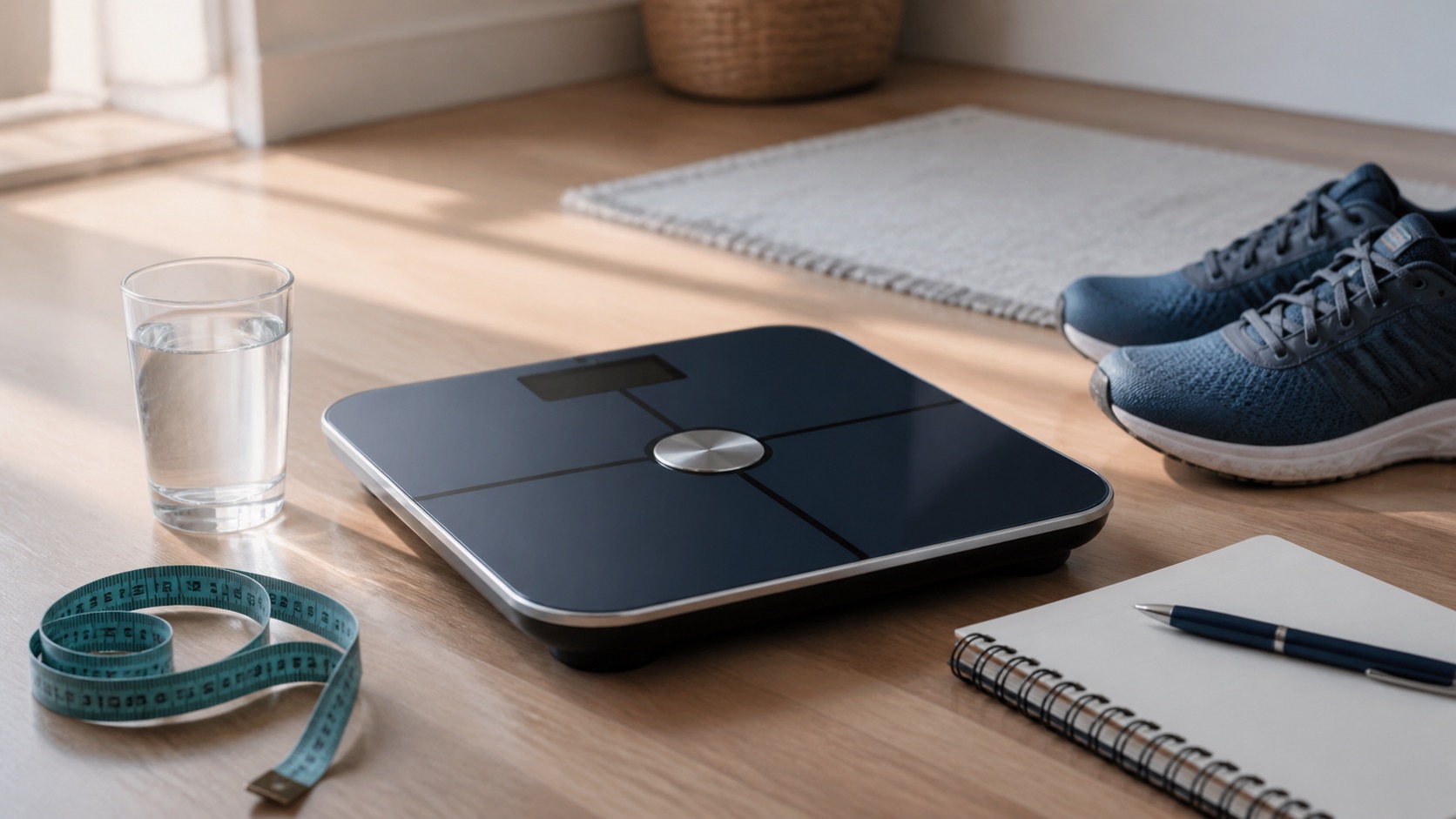
Quick answer
An overnight scale change usually reflects water, food and waste in the digestive tract, stored carbohydrate, and measurement conditions. It does not automatically mean an equivalent amount of body fat was gained or lost. Look at a consistent trend over time instead of judging progress from one reading. Rapid change accompanied by swelling, shortness of breath, fainting, repeated vomiting, or very little urine needs medical assessment.
What the scale actually measures
A household scale measures total mass at that moment. It cannot separate fat, muscle, water, food, stool, clothing, or the contents of the bladder. NIDDK notes that BMI, which uses scale weight, does not directly measure body fat. The same limitation matters when interpreting a single daily reading.
Changes in body fat generally reflect an energy pattern over time. Day-to-day scale movement can happen much faster because water and digestive contents can change within hours. This is why an isolated number should not be treated as a verdict on whether a plan is working.
Common reasons for overnight movement
Sodium intake can influence how much water the body retains. A restaurant meal, packaged food, or different eating pattern may contain more sodium than usual. Carbohydrate intake also affects stored glycogen and associated water. A higher or lower carbohydrate day can therefore change scale weight without representing the same amount of fat change.
Food and fluids add temporary mass until they are digested and eliminated. Constipation, diarrhea, vomiting, menstrual-cycle changes, heat, sweating, travel, alcohol, exercise, inflammation, and some medicines can also alter the number. A later dinner or a later weigh-in may simply capture more food and fluid still in the body.
Measurement conditions matter
A small change in technique can create apparent movement. Different scales, soft flooring, uneven placement, clothing, time of day, and whether the bladder has been emptied all affect comparability. NHLBI materials advise weighing under similar conditions and at the same time.
- Use the same scale on a firm, level surface.
- Compare readings taken at a similar time of day.
- Use similar clothing conditions.
- Avoid moving the scale between readings.
- Record the result without changing food or fluid intake to influence the next number.
If daily weighing increases anxiety or prompts unsafe restriction, weigh less often and discuss a healthier monitoring plan with the care team.
Use a trend, not a single point
A weekly pattern is usually more informative than one morning. Write down readings under consistent conditions, then consider the direction across several weeks along with energy, strength, food intake, hydration, symptoms, and waist measurements when appropriate.
Do not try to correct a higher reading by skipping meals, withholding water, overusing laxatives, taking unprescribed diuretics, or exercising excessively. These responses can cause dehydration, electrolyte problems, injury, and a more confusing scale pattern.
GLP-1 treatment and digestion
Some FDA-approved GLP-1 based medicines delay stomach emptying and can cause nausea, constipation, diarrhea, or vomiting. These effects can change food and fluid intake and digestive contents. The scale may move, but the symptoms themselves matter more than the number.
Contact the prescriber if gastrointestinal symptoms persist, if normal eating or drinking is difficult, or if weight is falling faster than expected. Do not change a prescribed medication dose based on one scale reading.
When a rapid change deserves attention
A sudden increase with swelling of the feet, legs, or abdomen, breathing difficulty, chest discomfort, or reduced exercise tolerance may reflect abnormal fluid retention and needs assessment. A rapid decrease with repeated vomiting, diarrhea, dizziness, dry mouth, or very little urine may reflect dehydration.
People with heart failure, kidney disease, liver disease, pregnancy, or a clinician-directed fluid plan should follow their own monitoring instructions. Their care team may use daily weight as a medical signal with thresholds that are specific to the condition.
What to record
Note the time, scale, clothing, recent sodium-heavy meals, bowel movements, menstrual timing, strenuous exercise, illness, vomiting or diarrhea, and visible swelling. Bring the record to the clinician if large changes repeat. Context is far more useful than a list of numbers alone.
PepMarket research products are not medications and are not for human use or consumption. Product-specific decisions belong with a licensed prescriber.
Urgent warning signs
Seek prompt medical care for rapid weight change with trouble breathing, chest pain, fainting, confusion, severe weakness, marked swelling, inability to keep fluids down, severe abdominal pain, or very little urine. Call emergency services when symptoms are severe or rapidly worsening.
Related reading
Read Water Weight vs. Fat Gain, Signs You May Be Dehydrated, and Constipation on a GLP-1.