
Quick answer
Reduced appetite can make drinking easy to forget, especially when early fullness or nausea makes a full glass uncomfortable. A practical routine uses small drinks at predictable times instead of waiting for strong thirst. Water can be the foundation, while milk, soup, yogurt, fruit, vegetables, and other water-rich foods can contribute fluid and nutrients.
There is no single fluid amount that is right for every adult. Needs change with body size, activity, weather, pregnancy, health conditions, and fluid losses. People with kidney disease, heart failure, swelling, or a prescribed fluid limit should follow individualized guidance from their healthcare professional.
Why a routine helps when appetite is low
Thirst and hunger are not always reliable planning tools. A person may notice that several hours have passed with very little food or fluid. GLP-1 medicines can also cause nausea, vomiting, diarrhea, constipation, and early fullness. When drinking is delayed until the end of the day, trying to catch up quickly may worsen stomach discomfort.
A routine does not require forcing a large bottle. It creates repeated, low-pressure chances to drink. Keep the plan simple enough to repeat on workdays, weekends, travel days, and days when symptoms are more noticeable.
A flexible daily pattern
After waking
Start with a small drink that feels comfortable. This can be water, warm tea, milk, or another beverage that fits your health needs. If morning nausea is present, try a slower pace and a cooler or lower-odor option. Do not force a large volume if it makes symptoms worse.
Between eating occasions
Take several small drinks between meals or snacks. Some people feel overly full when they drink a lot with food, so shifting more fluid between eating times can help. If drinking with meals is comfortable, there is no need to separate it.
Through the afternoon
Use visible cues. Keep a bottle or cup where you work, pair a drink with routine events, or set a quiet reminder. Refill the same container so it is easier to notice whether intake has fallen behind. A reminder is a prompt to check in, not a command to drink beyond what is comfortable or medically appropriate.
In the evening
Review the whole pattern before bedtime. Consider fluid intake, urine frequency, urine color, weather, exercise, and any vomiting or diarrhea. Avoid trying to replace an entire day of missed fluids immediately before sleep. If you have repeatedly fallen short or feel unwell, contact a clinician instead of relying on a last-minute catch-up.
Use food as part of hydration
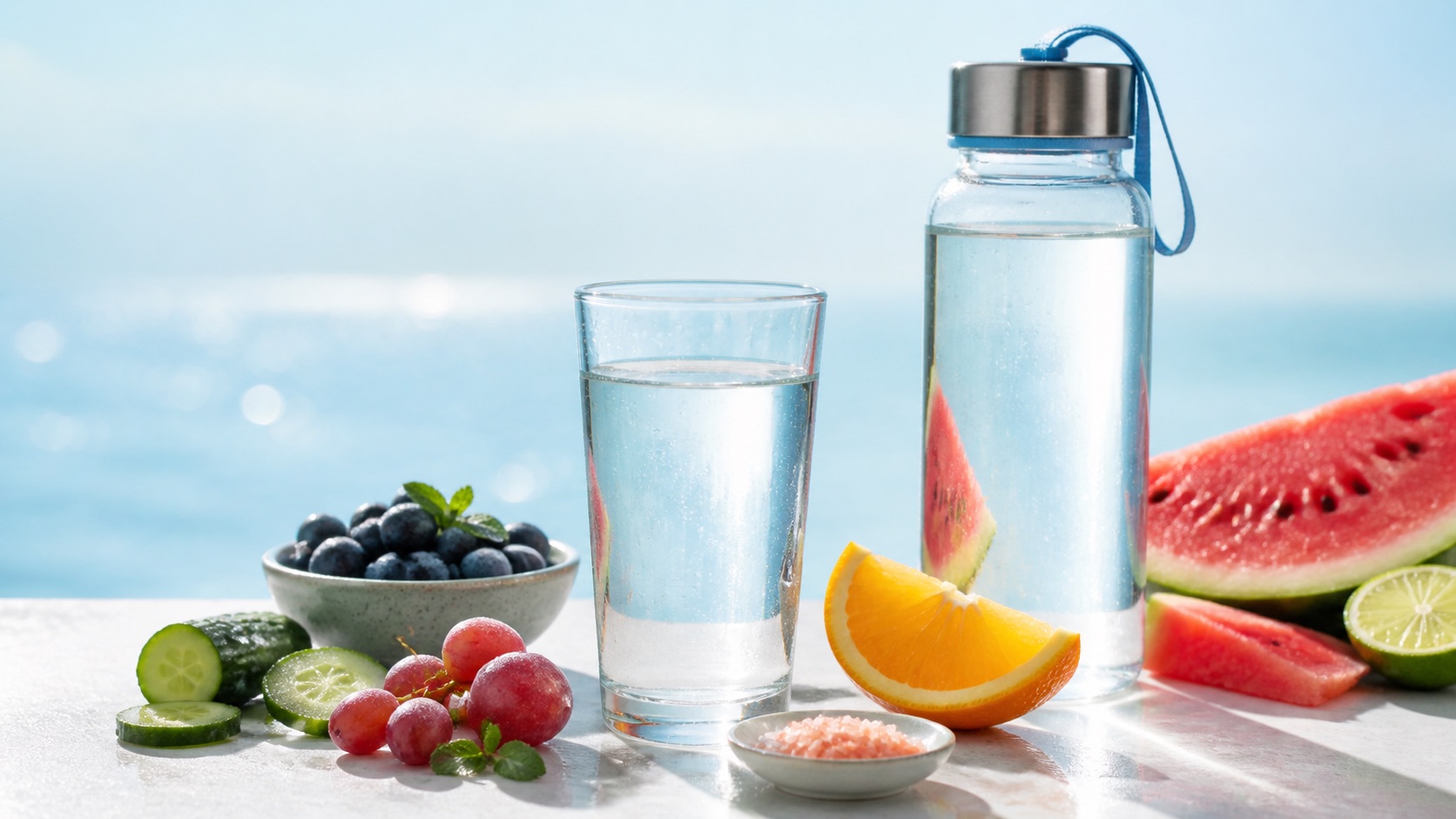
Food can contribute meaningful fluid. Soup, yogurt, milk, smoothies, melon, oranges, berries, cucumbers, and cooked vegetables may be easier to tolerate than repeated glasses of plain water. Choose options that also support overall nutrition. A beverage should not routinely replace all meals when food intake is already low.
Plain water is suitable for routine hydration for many people. Electrolyte or oral rehydration products may be useful after meaningful losses from vomiting, diarrhea, or heavy sweating, but they are not automatically needed every day. Check sodium, potassium, magnesium, sugar, caffeine, serving size, and mixing directions. Ask a clinician or pharmacist before frequent use if you have kidney, heart, blood pressure, or medication concerns.
Common pitfalls
- Waiting until intense thirst appears before drinking anything.
- Trying to finish a large bottle quickly when small drinks are better tolerated.
- Counting coffee, energy drinks, or alcohol as the entire hydration plan.
- Using several electrolyte products together without checking the totals.
- Assuming dark urine or dizziness has only one possible cause.
- Continuing home care when vomiting, diarrhea, pain, or weakness is worsening.
When to contact the prescriber
Contact the prescribing clinician if nausea, vomiting, diarrhea, constipation, pain, or extreme fullness repeatedly prevents adequate food or fluids. Report how often you are drinking, whether fluids stay down, changes in urination, dizziness, weakness, and how symptoms relate to medication timing. Do not increase, decrease, skip, or stop a medication without guidance.
Urgent warning signs
Seek prompt medical care if you cannot keep fluids down, have very little or no urine, faint, become confused, have trouble breathing, develop a rapid or irregular heartbeat, or have severe or persistent abdominal pain. Blood or material that looks like coffee grounds in vomit also needs urgent evaluation. These symptoms are not problems to solve by forcing more water at home.
Related reading
Continue with Hydration While Taking a GLP-1, Water vs. Electrolytes, and Signs You May Be Dehydrated.