
Quick answer
Hydration on a GLP-1–based medication is less about forcing one universal number and more about drinking regularly, replacing losses, and recognizing warning signs early. The USDA DRI Calculator can estimate total daily water needs, but individual requirements may be higher or lower.
Why GLP-1 users should pay attention to fluids
Nausea, vomiting, diarrhea, and reduced interest in food or drink can all lower fluid intake or increase fluid loss. Current FDA prescribing information for semaglutide and tirzepatide warns that gastrointestinal reactions leading to dehydration can contribute to acute kidney injury. That does not mean everyone needs electrolyte drinks; it means persistent losses and reduced intake should not be ignored.
What counts toward hydration?
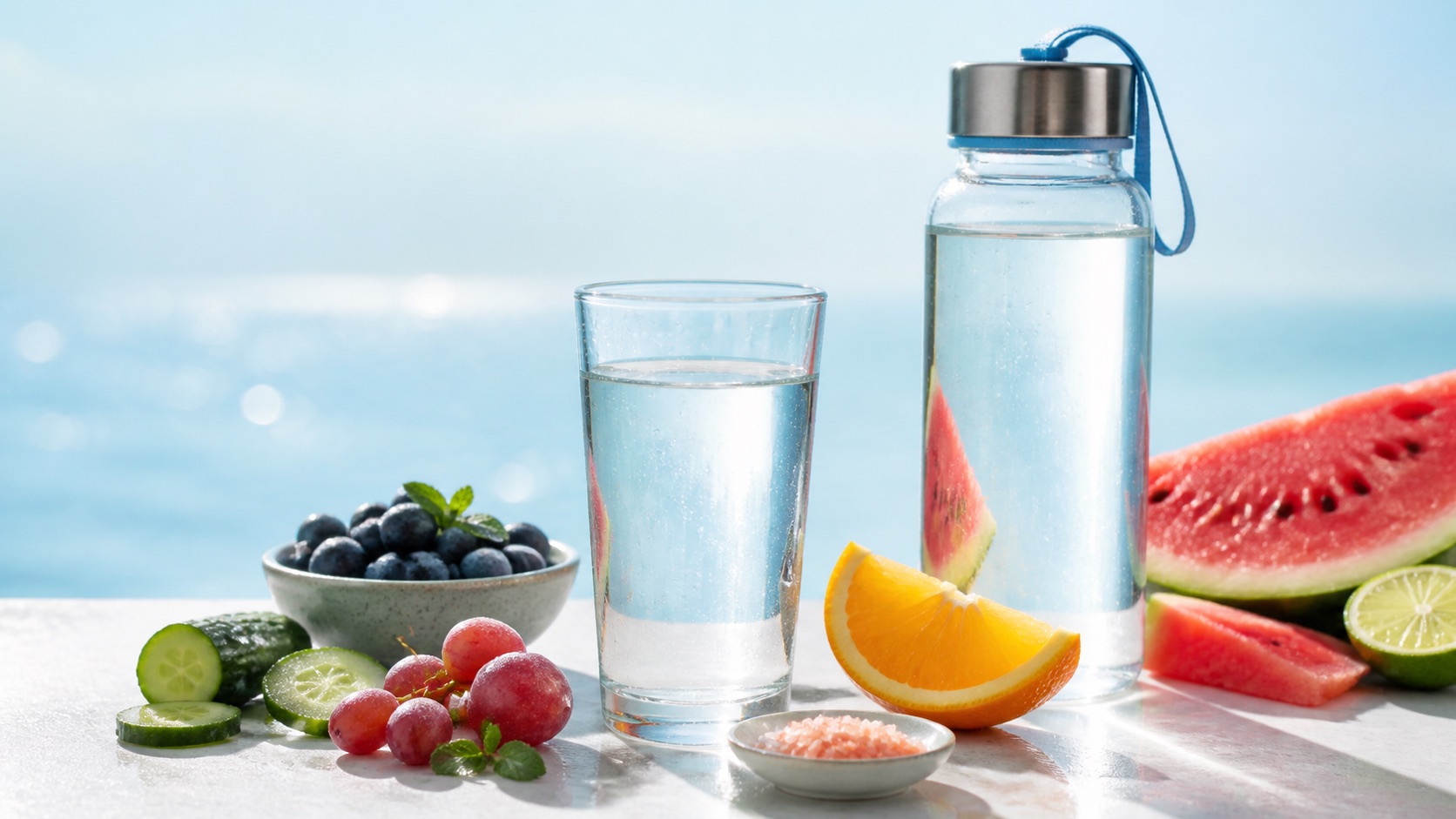
Total water includes plain water, other beverages, and water contained in food. Milk, soup, yogurt, fruit, vegetables, and ice pops can contribute. Caffeine-containing drinks still contain water, but heavy caffeine use may worsen jitteriness, reflux, or sleep for some people. Alcohol can worsen judgment and may complicate nausea, low blood sugar risk, or dehydration.
A practical routine
- Begin the day with a small drink rather than waiting until you feel very thirsty.
- Keep a bottle or cup visible and take regular sips between meals.
- If drinking with meals causes uncomfortable fullness, move more fluid to the time between meals.
- Use soups, fruit, yogurt, or other water-rich foods if plain water is unappealing.
- Increase attention to fluids during heat, exercise, fever, vomiting, or diarrhea.
- Track urine frequency and color as one clue, while remembering that vitamins and medicines can change color.
Water or electrolytes?
Plain water is appropriate for routine hydration for many people. An oral rehydration or electrolyte drink may be useful when vomiting, diarrhea, heavy sweating, or poor intake causes meaningful fluid and electrolyte loss. More is not always better: people with kidney disease, heart failure, blood-pressure concerns, or medicines affecting sodium or potassium should ask a clinician which products are appropriate.
Sports drinks can contain substantial sugar or sodium, while some “zero sugar” products contain sweeteners that bother the stomach. Read the label and avoid treating electrolyte powders as harmless unlimited supplements.
Signs you may be falling behind
Early clues can include thirst, dry mouth, darker urine, urinating less, fatigue, headache, dizziness, or lightheadedness. Severe dehydration can include confusion, fainting, no urination, rapid heartbeat, or rapid breathing and needs urgent medical help.
When to call for help
Tell the prescribing clinician promptly about nausea, vomiting, or diarrhea that does not go away. Seek medical care if you cannot keep fluids down, have very little or no urine, feel faint or confused, or symptoms are worsening. Severe or persistent abdominal pain, especially with nausea or vomiting, also needs medical evaluation rather than hydration advice alone.
Continue with Appetite Suppression vs. Inability to Eat and Common GLP-1 Side Effects and Red Flags.