
Quick answer
When nausea makes food difficult, cold or room-temperature foods may produce less aroma than hot meals. Mild foods may also be easier to tolerate than spicy, greasy, or strongly flavored choices. Try small portions, eat slowly, take fluids in amounts that stay down, and keep food safety in mind.
These ideas are supportive, not a treatment for the cause of nausea. Contact the prescriber if nausea persists, worsens after a medication change, or repeatedly prevents adequate food and fluid. Seek prompt care for severe pain, repeated vomiting, inability to keep fluids down, fainting, confusion, very low urination, or blood in vomit.
Why odor can matter
Smell and taste are closely connected. Cooking odors may intensify nausea before a person takes the first bite. Cold foods often release less aroma, so they can feel more approachable. Opening a window, using a fan, choosing foods that require little cooking, or leaving the kitchen while someone else prepares food can also reduce exposure.
Avoiding every smell is not realistic, and sensitivity varies. Keep a short list of foods that are usually neutral for you. Rotate the list so the diet does not become unnecessarily narrow.
Examples of mild options
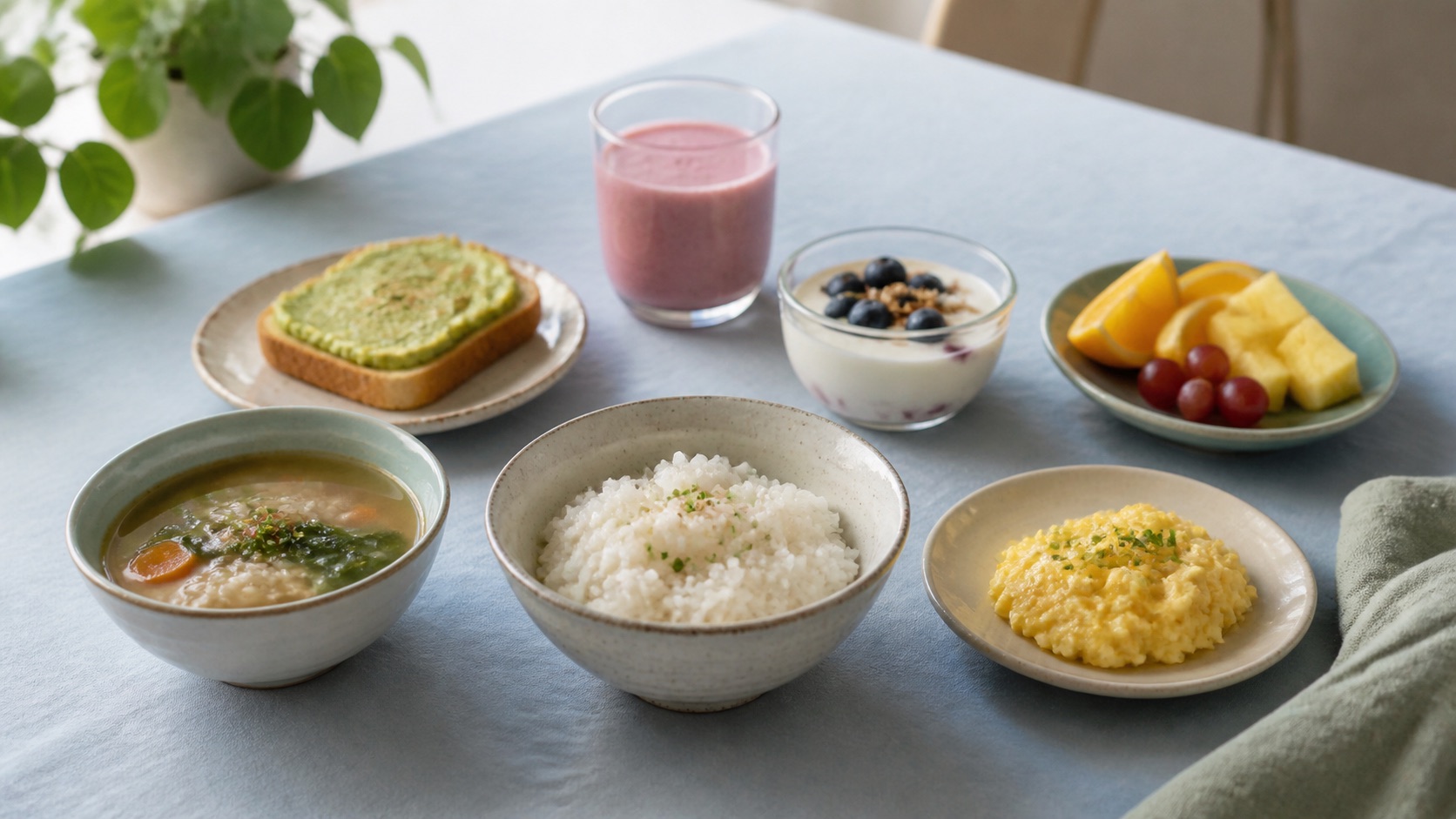
Possible choices include yogurt, cottage cheese, chilled fruit, applesauce, cereal with milk, a small sandwich, cold cooked chicken, plain crackers, toast, oatmeal that has cooled, rice, potatoes, broth, or a modest smoothie. Choose foods that match your allergies, cultural preferences, medical needs, and tolerance.
A mild food is not automatically a complete meal. Pair items when possible. Crackers can be combined with cheese or yogurt. Toast can be combined with egg or nut butter. Fruit can be combined with yogurt or milk. The pairing adds energy and protein without requiring a large portion.
Use temperature as a tool
Cold is not always better. Some people prefer warm broth or tea, while very cold drinks worsen discomfort for others. Test small amounts and notice the result. Temperature is one variable, along with portion size, fat content, fiber, texture, sweetness, acidity, and smell.
If a food works only when cold, store it safely. Refrigerate perishable food promptly. Do not leave dairy, eggs, meat, cooked grains, or prepared meals at room temperature for extended periods. When in doubt, use freshly prepared or properly chilled food.
Keep portions small and paced
A large bowl of even a mild food may worsen fullness. Begin with a small serving, eat slowly, and pause. If it stays down, plan another small eating occasion later. This approach can be more comfortable than forcing a normal portion during a nausea flare.
Do not lie down immediately after eating if reflux is a concern. Avoid rushing, intense exercise right after food, and large amounts of fluid at once if those patterns worsen symptoms. Individual tolerance matters.
Fluids still matter
Nausea and vomiting can quickly reduce fluid intake. Take small amounts of clear liquid often when larger drinks are difficult. Water, broth, or another tolerated beverage may be useful. Significant fluid losses may require an oral rehydration approach guided by a clinician, particularly for people with kidney, heart, blood pressure, or diabetes concerns.
Watch urine frequency, dizziness, weakness, dry mouth, and the ability to stand and think clearly. Urine color can be a clue, but it is not a diagnosis because foods, vitamins, medicines, and health conditions can also change it.
A low-odor setup
- Keep a few tolerated foods chilled and ready.
- Ventilate the kitchen before food preparation.
- Choose simple preparation methods with less frying or browning odor.
- Ask someone else to cook when smells are a strong trigger.
- Use covered containers and move away from the kitchen after preparation.
- Keep a backup option for work or travel.
What to avoid doing
- Skipping fluids for most of the day because drinking feels unpleasant.
- Living on crackers alone for an extended period.
- Using sugary drinks or energy drinks as the entire nutrition plan.
- Forcing a large meal after a day of low intake.
- Assuming persistent nausea is always harmless.
- Changing medication without contacting the prescriber.
When to contact the prescriber
Report nausea that repeatedly limits intake, lasts longer than expected, worsens after a dose change, or occurs with vomiting, constipation, diarrhea, reflux, pain, dizziness, or weakness. Tell the clinician what foods and fluids stay down, how often you urinate, and whether normal activities are becoming difficult.
Urgent warning signs
Seek prompt medical care for severe or persistent abdominal pain, repeated vomiting, inability to keep fluids down, very little or no urine, fainting, confusion, trouble breathing, chest pain, blood or coffee-ground material in vomit, black stool, or signs of a serious allergic reaction.
Related reading
Continue with Small Meals, Frequent Snacks, When Reduced Appetite Has Gone Too Far, and Dark Urine, Dizziness, and Headaches.