
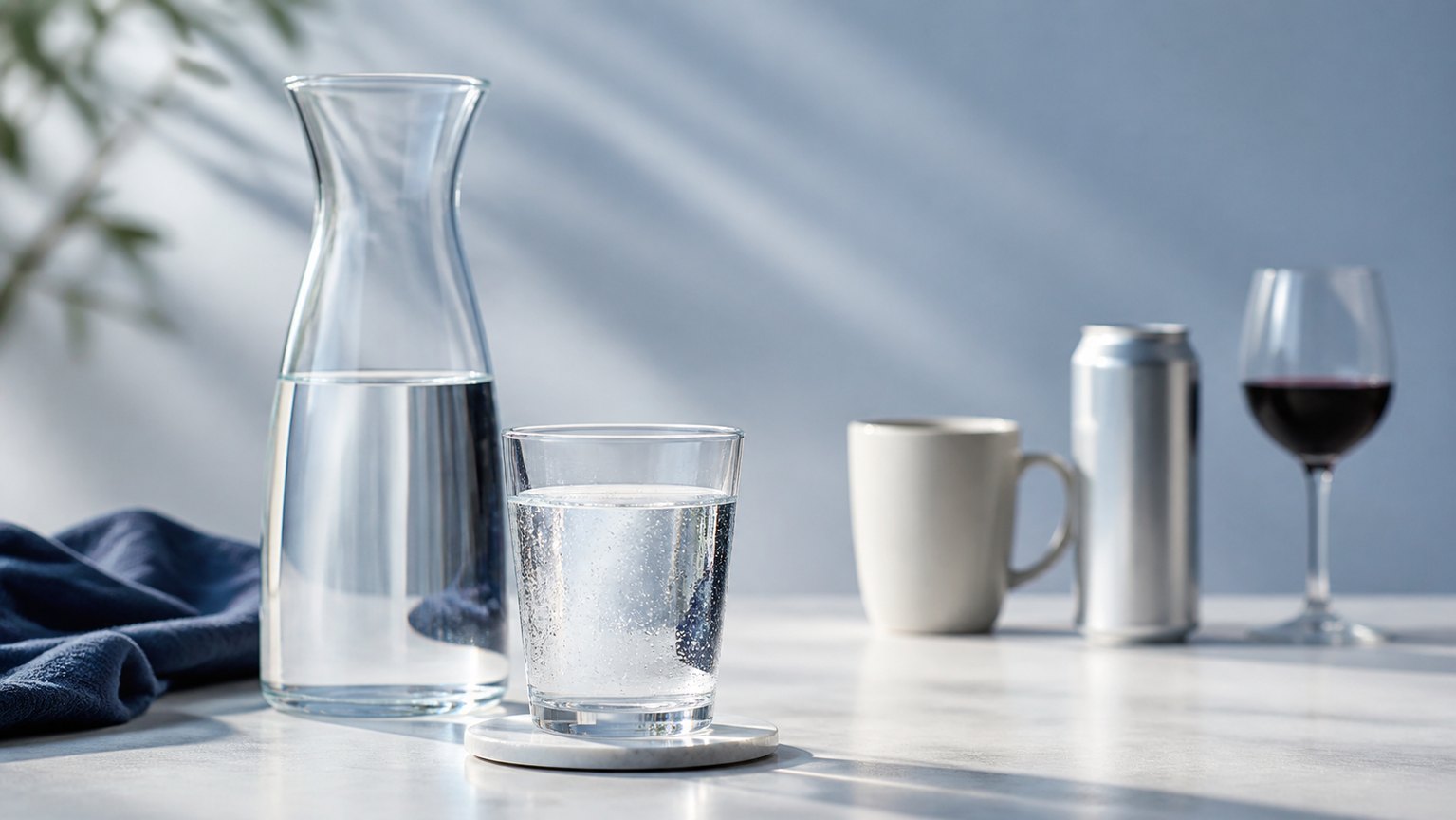
Quick answer
Coffee, tea, and many other beverages contribute fluid, but they are not identical to plain water. Energy drinks may contain high caffeine and added ingredients. Alcohol can impair judgment and complicate nausea, food intake, blood sugar management, and hydration. A sensible routine uses water and water-rich foods as the foundation, with other beverages considered in context.
Coffee and tea still contain water
Caffeinated drinks contribute to total fluid intake. That does not mean unlimited caffeine is appropriate. Caffeine sensitivity varies, and common effects can include jitteriness, a faster heartbeat, anxiety, reflux, or sleep disruption. Poor sleep can also make nausea, fatigue, and appetite management feel harder.
Check the actual serving size. A large café drink may contain more caffeine and sugar than a small home-brewed cup. If coffee worsens nausea or reflux, reduce the portion, change timing, or discuss the symptom pattern with a clinician.
Energy drinks require a closer label check
Energy drinks can combine caffeine with sugar, stimulants, vitamins, amino acids, or herbal ingredients. Products vary widely, and the total caffeine may come from several ingredients. A sugar-free label does not mean caffeine-free or risk-free.
Using an energy drink to push through weakness caused by very low food or fluid intake can mask the problem temporarily. Persistent weakness, dizziness, or inability to eat needs assessment rather than more stimulant.
Alcohol is not a hydration strategy
Alcohol affects judgment, coordination, sleep, and blood sugar regulation. It can make it harder to recognize worsening dehydration or low blood sugar. It may also aggravate nausea or lead to less careful food and medication decisions.
People using insulin or medicines that can cause low blood sugar need individualized alcohol guidance. Anyone with liver disease, pancreatitis history, pregnancy, substance use concerns, or medicines that interact with alcohol should speak with a clinician. Do not assume a beverage is safe because it is low in carbohydrate.
Build a practical fluid routine
- Keep water visible and take small drinks throughout the day.
- Use milk, soup, fruit, vegetables, yogurt, or other water-rich foods.
- Pay more attention to fluids during heat, exercise, fever, vomiting, or diarrhea.
- If drinking with meals worsens fullness, move more fluid between meals.
- Check caffeine, sugar, alcohol, and serving size rather than judging only the product name.
Common pitfalls
- Counting several large coffees as the entire hydration plan.
- Using energy drinks instead of food when intake is already too low.
- Combining multiple caffeine products without adding the totals.
- Drinking alcohol when nauseated, vomiting, or unable to eat.
When to contact the prescriber
Contact the prescribing clinician if you repeatedly cannot meet food or fluid needs, symptoms worsen after a dose change, or caffeine and alcohol complicate nausea, sleep, heart symptoms, or blood sugar management. Ask a pharmacist about interactions with medicines. Do not change medication dosing on your own.
Urgent warning signs
Seek prompt medical care for fainting, confusion, chest pain, trouble breathing, a rapid or irregular heartbeat, severe weakness, repeated vomiting, inability to keep fluids down, very little urine, severe low blood sugar symptoms, or severe and persistent abdominal pain.
Related reading
Read Hydration While Taking a GLP-1 and Signs You May Be Dehydrated.