
Quick answer
A balanced day of eating while taking an FDA-approved GLP-1–based medication can use smaller meals and snacks without reducing the diet to only shakes, fruit, or toast. Across the day, aim for variety: a protein food, a carbohydrate source, some dietary fat, produce or another fiber-containing food, and regular fluids. Exact portions and nutrient targets should be individualized.
Think in eating occasions, not one perfect plate
Appetite reduction and earlier fullness may make a traditional three-meal pattern uncomfortable. It can be easier to spread food across several small eating occasions. The goal is not to force a large volume. It is to give the body repeated opportunities to receive energy, protein, carbohydrate, fat, vitamins, minerals, and fluid.
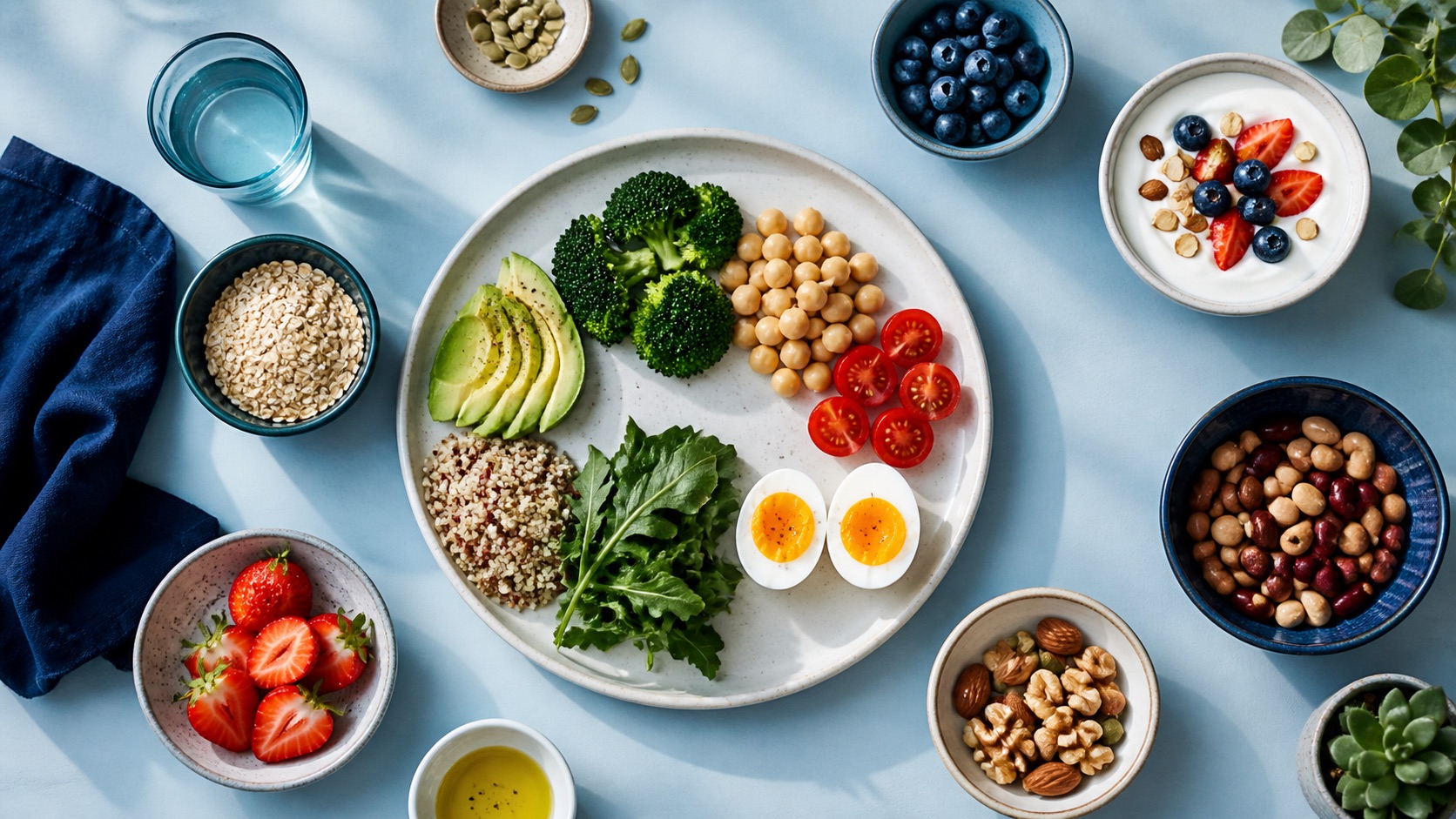
A simple small-meal framework is: choose one protein food, add an energy-providing carbohydrate, include a modest source of fat when tolerated, and add fruit or vegetables in a portion that feels manageable. Examples include yogurt with oats, berries, and nut butter; eggs with toast and fruit; soup with beans or chicken plus crackers; or rice with fish or tofu and cooked vegetables.
An illustrative day
This example is a pattern, not a prescription. Individual calorie, protein, fluid, allergy, diabetes, kidney, pregnancy, and gastrointestinal needs can differ.
- Morning: oatmeal made with milk or a fortified alternative, topped with yogurt and fruit.
- Midday: half a sandwich with chicken, tuna, egg, beans, or tofu, plus soup or soft fruit.
- Afternoon: cheese and crackers, hummus and pita, or yogurt with cereal.
- Evening: a small serving of rice, potatoes, pasta, or another grain with a protein food and cooked vegetables.
- Fluids: regular small drinks between meals if drinking with food worsens fullness.
Adjust texture and timing to symptoms
On nausea days, cooler or lower-odor foods may be easier. Very fatty, fried, spicy, or unusually large meals can aggravate symptoms for some people. That does not mean dietary fat should be eliminated; small amounts of foods such as avocado, olive oil, nuts, seeds, or nut butter can add energy without a large volume. Change one factor at a time so you can tell what is actually helping.
Common pitfalls
- Using a protein shake as a complete day of nutrition.
- Eating protein alone while avoiding most carbohydrate and fat.
- Waiting until late evening to attempt one large meal.
- Forcing a universal calorie, water, or protein target that ignores medical history.
- Treating repeated vomiting or inability to eat as a normal weight-loss strategy.
When to contact the prescriber
Contact the prescribing clinician if reduced appetite repeatedly prevents adequate food or fluids, symptoms worsen after a dose change, or nausea, vomiting, diarrhea, constipation, dizziness, or weakness persists. Do not increase, decrease, skip, or stop medication without discussing the situation with the prescriber.
Urgent warning signs
Seek prompt medical care for severe or persistent abdominal pain, repeated vomiting, inability to keep fluids down, very little or no urination, fainting, confusion, trouble breathing, signs of a serious allergic reaction, blood or coffee-ground material in vomit, or severe low-blood-sugar symptoms. These are not problems to solve with meal planning alone.
Related reading
Start with Eating Enough While Taking a GLP-1 and continue with Hydration While Taking a GLP-1.